
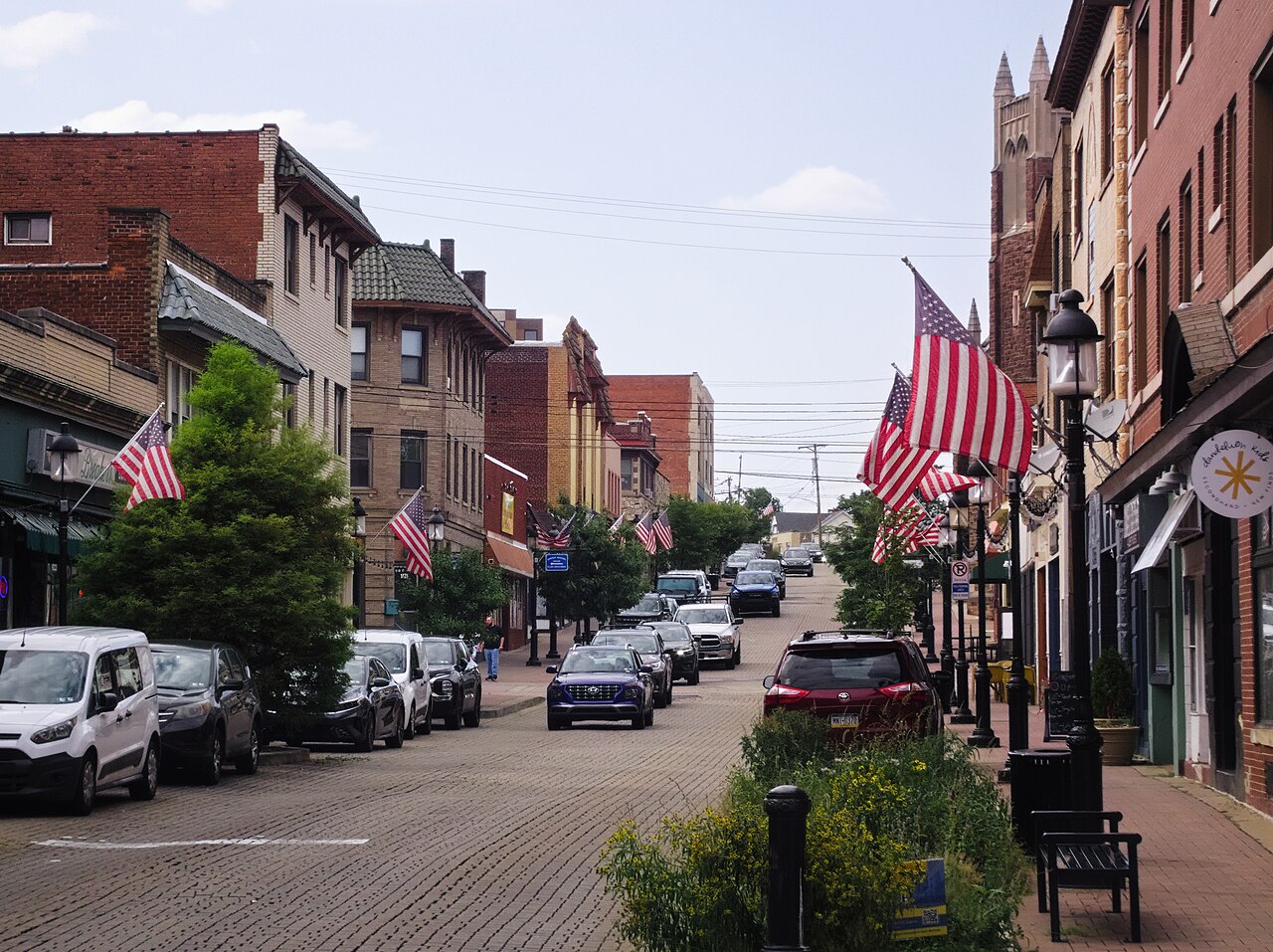
If you’ve ever ridden the Red Line T into the South Hills and caught a glimpse of a little business strip with an old movie theater marquee and a row of walkable storefronts, that’s Dormont. It’s not flashy. There’s no skyline view, no new coffee shop opening every six months. What it has is a walkable grid, two transit stops inside one square mile, and some of the more realistic home prices still within easy reach of downtown. Here’s what you’d actually be buying into.
Where Dormont Actually Is (and Isn’t)
First, the thing a lot of buyers get wrong: Dormont isn’t a Pittsburgh neighborhood. It’s its own borough, incorporated in 1909, making it the first independent municipality in the South Hills. It sits about four miles south of downtown, bordering Beechview, Brookline, and Banksville on the Pittsburgh side, with Mt. Lebanon along its southern and western edge.
Because it’s a separate municipality, Dormont has its own local government, police department, and tax rate, which is a different setup than buying inside Pittsburgh city limits. It’s a detail worth understanding early, not something to sort out after you’ve fallen for a house.
What the Market Actually Looks Like Right Now
Numbers vary depending on the source and the month, so take any single figure as a general range rather than gospel. Recent data has put the average home value in Dormont around $250,000, and median sale prices have landed in the $280,000s, with both figures trending down slightly year over year rather than up. Recent listings have also been spending close to seven weeks on market, which tells you this isn’t a neighborhood where you need to make an offer before you’ve finished reading the listing.
- High $200s: Two- to three-bedroom homes with cosmetic updates and one full bath
- Mid to high $300s: Renovated single-family homes with parking, or legal two-unit properties
- $400,000 and up: Inventory thins out fast here, and you’re in territory that starts to overlap with Mt. Lebanon and Brookline pricing
Homes close to the two T stops tend to hold value a little differently than homes on the outer edges of the borough, so location within Dormont matters almost as much as Dormont itself.
The Housing Stock You’ll Actually Find
Most of Dormont was built during the streetcar era, roughly the 1910s through the 1940s, after the borough incorporated and the Liberty Tunnel opened up easier access to downtown. That means older construction with real character, and also some predictable maintenance items worth budgeting for before you fall in love with the woodwork:
- Knob-and-tube wiring remnants: an old electrical wiring method that most insurers and inspectors want replaced or at least evaluated
- Galvanized supply lines: older metal water pipes that corrode from the inside over time and often need updating
- Clay lateral sewer lines: the pipe connecting a home to the main sewer line, which can crack or get invaded by tree roots with age
None of this makes Dormont a bad bet. It makes a thorough inspection non-negotiable, the same as it would in most of Pittsburgh’s older housing stock. Off-street parking is also a real value driver here, so don’t be surprised if two nearly identical houses carry different price tags once you notice which one has a driveway.
Why People Actually Move Here
- Transit access: two Red Line stops, Dormont Junction and Potomac, inside one square mile, with a direct line into downtown
- A real walkable business district: the Potomac Avenue corridor has a rebuilt streetscape, a historic theater (Row House Hollywood), a coffeehouse, a cider and tap house, and several long-standing restaurants
- One of the largest municipal pools in Pennsylvania: Dormont Pool, inside Dormont Park, runs well over 60,000 square feet
- A consistent school district: Dormont has been part of Keystone Oaks School District, jointly with Castle Shannon and Green Tree, since 1965
- A genuine sense of community: annual events like Dormont Day on July 4th and the Dormont Street and Music Festival draw people out of their houses and onto the sidewalks
What to Watch Before You Buy
Dormont Junction station is scheduled for reconstruction starting in spring 2027, along with planned transit-oriented development on a nearby parking lot. If you’re looking at homes close to that station, it’s worth knowing there could be some construction noise and disruption in the near term, in exchange for a nicer station and more development down the line.
It’s also worth being honest about trade-offs with yourself before you tour your first house. Older housing stock means character, but it also means an inspection should carry real weight in your decision, not just be a formality before closing. And because Dormont is small and dense, a block or two can change your daily experience of the place more than it would in a bigger neighborhood.
Frequently Asked Questions
Is Dormont part of the city of Pittsburgh?
No. Dormont is its own borough in Allegheny County, with its own local government and tax rate, even though it sits right at Pittsburgh’s southern edge and feels connected to the city day to day.
What’s the average home price in Dormont, PA?
Recent figures put the average value around $250,000, with median sale prices in the $280,000s. Both have trended slightly down year over year rather than up, but current listings matter far more than any general figure, since inventory and pricing can shift from month to month.
Is Dormont walkable?
Yes. The borough is about one square mile, with a rebuilt commercial corridor along Potomac Avenue that includes restaurants, a coffeehouse, and a historic theater, all within walking distance of most of the housing stock.
What school district serves Dormont?
Keystone Oaks School District, which Dormont has shared with Castle Shannon and Green Tree since 1965.
Can I get into downtown Pittsburgh from Dormont without a car?
Yes. Dormont has two Red Line light-rail stops, Dormont Junction and Potomac, both within the borough, with a direct ride into downtown.
If Dormont’s on your list, or you’re trying to figure out whether it should be, let’s spend fifteen minutes going through what’s actually available right now and whether the numbers make sense for what you’re trying to do. Does that make sense as a starting point?
Leave a Reply