
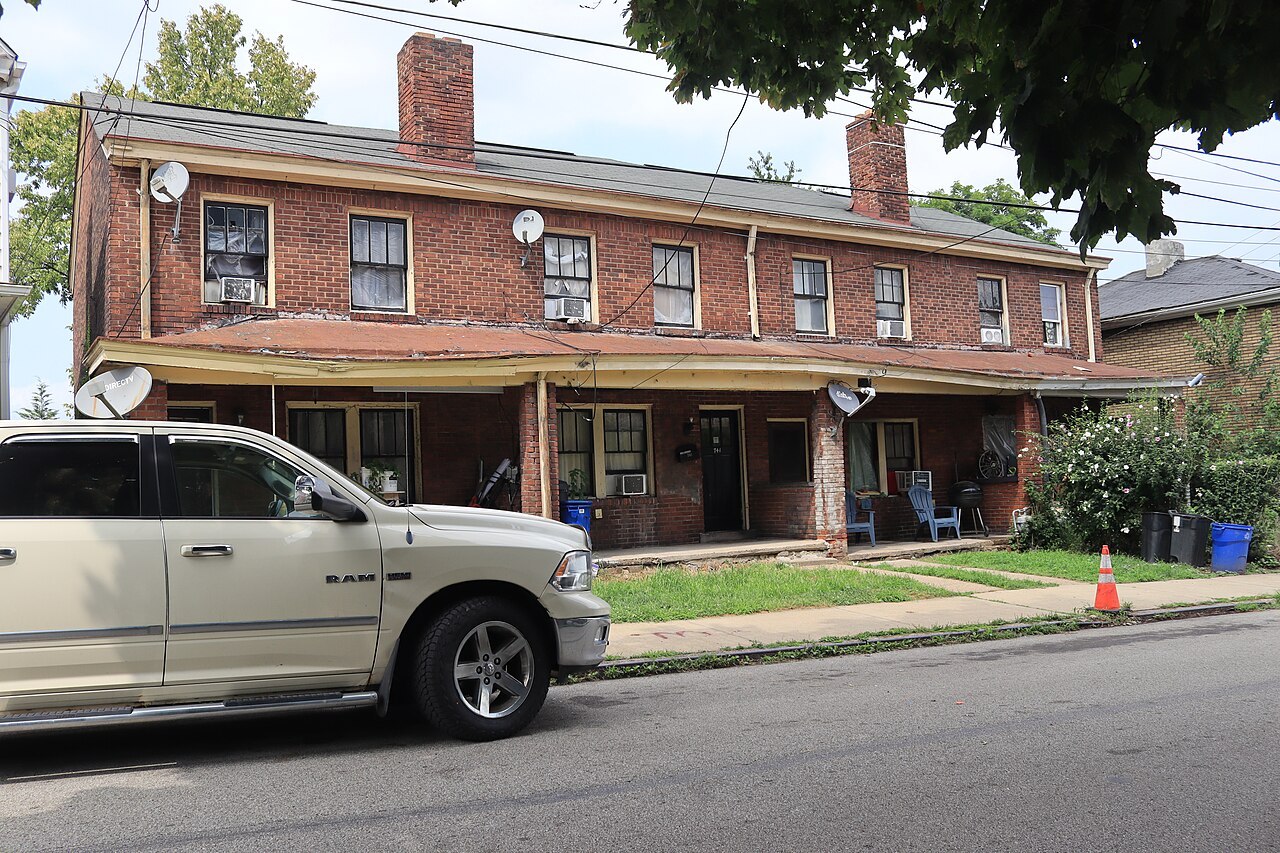
If the thought of a mortgage payment has you doing math in your head at 2 a.m., you’re not alone — and you’re not stuck with just two options of “buy a house you can barely afford” or “keep renting forever.” There’s a third path a growing number of Pittsburgh buyers are taking, and it just got some national attention: buy a small multi-unit property, live in one unit, and let your tenants help cover the mortgage. It’s called house hacking, and Pittsburgh recently ranked 12th among major U.S. metros for it. Let’s talk about what that actually means for you.
What “House Hacking” Actually Means
Strip away the buzzword and it’s a simple idea: instead of buying a single-family home, you buy a duplex, triplex, or fourplex, move into one of the units, and rent out the rest. The rent from your tenants offsets some — sometimes most — of your monthly housing cost. You get to build equity in a property instead of paying down someone else’s mortgage, and you get a head start on rental income without needing a pile of investor cash to do it.
It’s not a new idea — Pittsburghers have been doing informal versions of this for generations, especially in neighborhoods where a lot of the housing stock was originally built as two-family homes. What’s new is how much attention it’s getting as buyers look for creative ways to make the math work in a market where both prices and rates have crept up.
Why Pittsburgh Ranked Where It Did
A recent metro-level analysis of house-hacking potential — weighing affordability, income potential, rental demand, and market growth — put Pittsburgh at 12th nationally. That’s a meaningful showing, and it comes down to a few things that are genuinely true about our market:
- The affordability gap works in your favor. The income needed to qualify for a median-priced home here is estimated around $63,000 a year, while the metro’s median household income is closer to $74,000. That roughly $10,000 cushion is unusual — in a lot of hot metros, the math runs the opposite direction.
- Rental demand has real staying power. Between Pitt, CMU, and UPMC alone, this region has a steady supply of students, residents, grad students, and hospital staff who need places to live, often on a schedule (leases, rotations, semesters) that lines up well with rental housing.
- The housing stock cooperates. A lot of Pittsburgh’s classic neighborhoods — think the kind of streets lined with brick two- and three-story homes — were built with legal two-unit configurations from the start, or converted decades ago. You’re not searching for a needle in a haystack the way you might in a metro built almost entirely on single-family subdivisions.
How the Financing Actually Works
This is the part that makes house hacking realistic for a first-time buyer instead of just a landlord with deep pockets. If you’re going to occupy one of the units as your primary residence, you don’t have to finance it like an investment property.
- FHA loans allow as little as 3.5% down on a 2-to-4-unit property, as long as you move in within 60 days of closing and live there for at least a year. Compare that to a conventional investment-property loan, which typically wants 15-25% down and treats you like a landlord from day one, not a homeowner.
- Duplexes are the simplest lane. A two-unit property doesn’t trigger any extra income test — you qualify largely the way you would for a single-family home, with the option to count a portion of the projected rent from the other unit toward your qualifying income.
- Triplexes and fourplexes have an extra hurdle: the FHA self-sufficiency test. For 3- and 4-unit properties, FHA wants to see that the property could cover its own full mortgage payment (principal, interest, taxes, insurance, and any mortgage insurance or HOA dues) using 75% of the appraiser’s market rent estimate, even if you weren’t living there. It’s a real number to run before you fall in love with a property — not every triplex you tour will pencil out on paper the way it does in your head.
None of this is a substitute for talking to a lender who actually underwrites these loans regularly. Multi-unit FHA files are a little more involved than a standard single-family purchase, and you want someone on your side who’s done it before.
The Part the Headlines Skip: Your Real Numbers
Here’s where I’ll play the honest friend instead of the hype machine. The national rankings and news coverage are based on averages, and your deal isn’t an average — it’s one specific property with specific numbers. Two things have changed recently that make it worth running your own math carefully instead of assuming a strategy that worked for someone else two years ago will work the same way for you today.
- Property taxes went up — a lot. The City of Pittsburgh’s 2026 budget included roughly a 20% municipal property tax increase, on top of a roughly 36% Allegheny County increase that took effect in 2025. If you’re underwriting a rental cash-flow projection using an old tax bill or a rule of thumb from a few years back, you’re going to be too optimistic. Pull the current millage and get an accurate estimate before you commit to a number.
- Rates aren’t where they were during the pandemic-era refinance boom. Thirty-year rates have been sitting in the high-6% range recently, touching one-year highs. That’s a very different monthly payment than the “just run it at 5%” napkin math a lot of house-hacking content online is still using. Run your actual quoted rate, not a number from an article.
Neither of these makes house hacking a bad idea — they just mean the version of the math that works has to use this year’s numbers, not last year’s optimism.
Where to Look
You’ll find the best selection of legal 2-to-4-unit properties in Pittsburgh’s older, denser neighborhoods rather than in newer suburban developments — places where two- and three-story homes with separate entrances and separate utilities were part of the original building pattern. I can pull an up-to-date list of what’s actually on the market with legal multi-unit zoning (that “legal” part matters — an illegally converted duplex can create real headaches with financing, insurance, and code enforcement down the road), so you’re not chasing listings that only look like a house hack from the photos.
Frequently Asked Questions
Do I need landlord experience to do this? No. Because you’re living in the building, you’re in a much better position to learn the basics of being a landlord — showing units, screening tenants, handling repairs — on a small scale before you ever consider scaling up. Most first-time house hackers have never rented out a property before.
What credit score or reserves do I need? FHA’s minimum credit requirements are generally more forgiving than conventional financing, but multi-unit properties often come with lenders wanting to see a few months of mortgage payments in reserve, partly because rental income takes a little while to become “seasoned” on paper. Your lender can tell you exactly what they’ll require for your specific file.
What happens after my one year of required occupancy is up? At that point you’re free to move out and rent your unit too, refinance into different terms, or simply stay put and keep enjoying the reduced housing cost. Plenty of people stay for years; others use it as a stepping stone to their next home while holding onto the property as a rental.
Is a duplex or a triplex/fourplex the better starting point? For a first-timer, a duplex is usually the more forgiving entry point — simpler qualifying, simpler management, and half as many tenant relationships to navigate. Triplexes and fourplexes can produce more rental income, but the self-sufficiency test means the property itself has to earn its keep on paper before you even factor in your own income.
Can this work if I don’t want to be a hands-on landlord long-term? Yes — some buyers use house hacking as a short-term strategy to get into homeownership affordably, then convert to a more hands-off setup (a property manager, a long-term tenant, or eventually selling) once they’ve built some equity and moved on.
If you’ve been running the numbers on this in your head and want a second set of eyes on whether a specific property actually pencils out, I’m happy to sit down and go through it together — no pressure, no pitch, just an honest look at whether it fits your situation.
Leave a Reply