
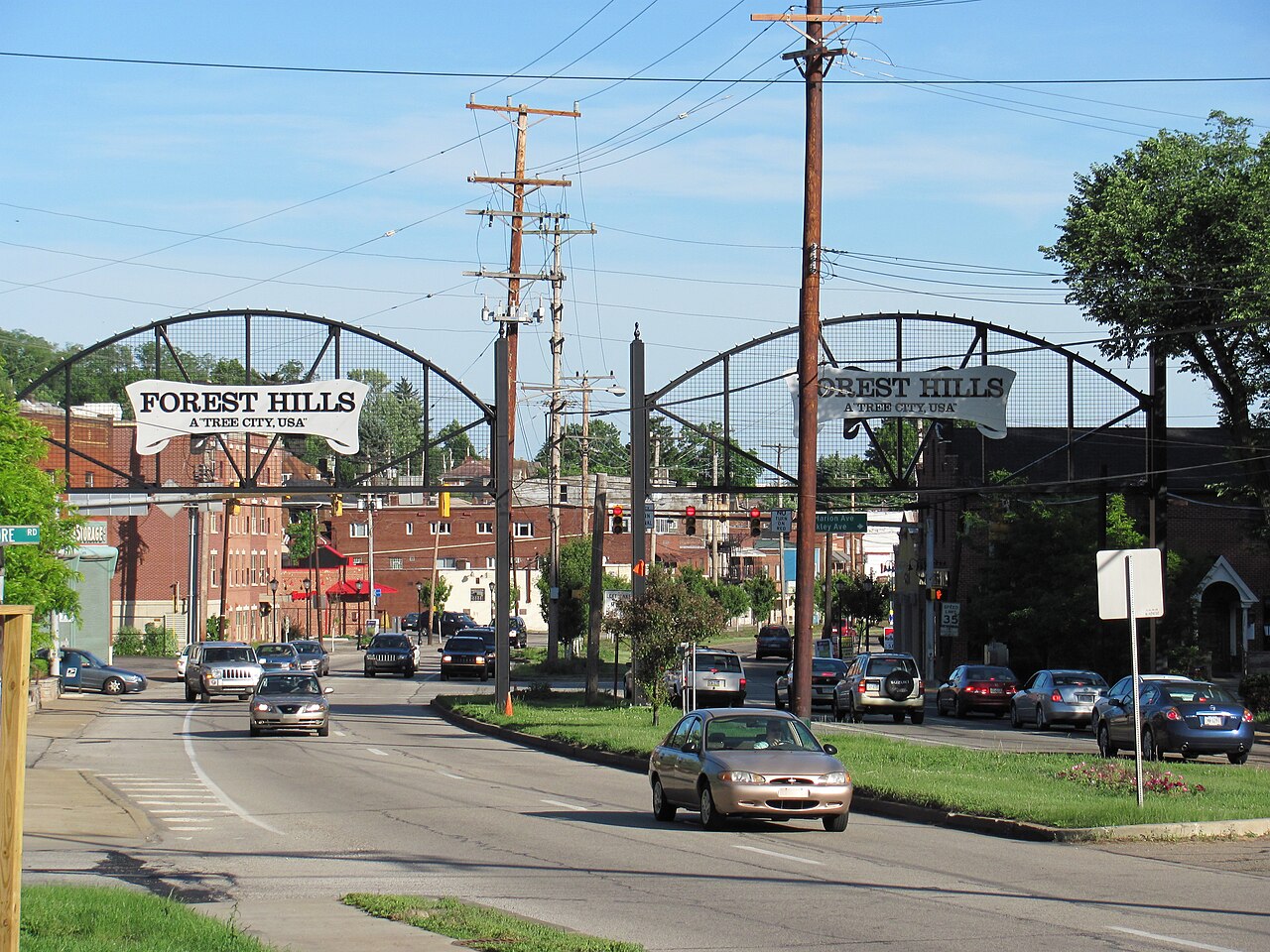
If you’ve cross-referenced home prices across the East End and landed on Forest Hills, you’re not wrong to wonder what the catch is. A small borough with prices well under the city average usually means something’s off somewhere. In this case, there isn’t much of a catch. It’s just a quiet, built-out suburb that never got the attention Regent Square or Squirrel Hill did. Here’s what you’d actually be buying into.
Where (and What) Forest Hills Actually Is
Forest Hills is its own borough, not a Pittsburgh neighborhood. It was incorporated on July 29, 1919, carved out of Wilkins and Braddock Townships after residents pushed for local control, largely over taxes and who’d maintain the Lincoln Highway (Route 30) running through the area. About 850 people lived there at the time.
It’s a small place, just 1.52 square miles, sitting roughly 7 miles east of downtown Pittsburgh, about a 15- to 20-minute drive via I-376, the Parkway East, outside of rush hour. Today it’s home to roughly 6,300 residents across about 3,100 households, according to recent Census Bureau estimates.
Longtime residents still refer to parts of the borough by older section names: Ardmore, Westinghouse Plan, Rockwood, Woodland Hills, Edgewood Acres, and Bryn Mawr. You’ll hear these more from locals than you will on a listing sheet.
One genuinely fun piece of history: starting in 1923, Westinghouse ran an experimental shortwave radio operation in Forest Hills, led by engineer Frank Conrad. Conrad’s earlier backyard experiments had already helped launch KDKA, the country’s first commercial radio station, just a few years before. It’s a small borough with an outsized footnote in broadcasting history.
What You’ll Actually Pay: Taxes and the Market
Forest Hills sits in Woodland Hills School District, and the combined 2026 millage runs about 45.26 mills: 6.43 for the county, 9.75 for the municipality, and 29.08 for the school district. On the borough’s median assessed value of roughly $104,100, that works out to about $4,710 a year in property tax. Remember that Allegheny County assessed values typically run well below actual market value, so don’t assume the assessed figure matches what you’d pay for the house.
As for the market itself, recent data put the median sale price around $229,000, down slightly year over year. Typical prices run from the $140,000s for smaller or older homes and condos up to the $400,000s for larger single-family homes on the better streets.
That range sits noticeably below many East End neighborhoods and below the city-wide Pittsburgh median. If proximity to downtown matters more to you than walking distance to a specific business strip, Forest Hills is genuinely one of the better value plays left close to the city.
The Housing Stock
Most of Forest Hills was built in the early to mid-20th century: brick colonials, Cape Cods, and a fair number of post-war ranches, with condos and townhomes scattered through, especially near Route 30. Because so much of it predates 1960, buyers should expect the same kind of maintenance items common across Pittsburgh’s older housing stock. Our home inspection red flags guide covers what to look for before you write an offer.
One thing worth flagging honestly: recent flood-risk data shows roughly 10% of properties in Forest Hills carry a severe 30-year flood risk rating, concentrated in the borough’s lower-lying sections. Before you get attached to a specific house, it’s worth checking its flood zone status directly. Our flood zone and insurance guide walks through how to do that and what it could mean for your insurance costs.
Life in Forest Hills
- Forest Hills Park — the borough’s largest park, and home to the community pool.
- Koch Park — a smaller park on the eastern half of the borough.
- The Forest Hills branch of the C.C. Mellor Memorial Library, located inside the municipal complex.
- Tree City USA — the borough has held this designation for close to 40 consecutive years.
- Fourth of July Community Day — a borough tradition that’s been running for nearly 80 years.
- The Route 30 corridor — Ardmore Shopping Center covers everyday errands with an Aldi and a Rite Aid, and local spots like Vincent’s Pizza Park and Roman Bistro cover dinner.
For commuters, I-376 runs along the borough’s northern edge, and there’s a park-and-ride lot for anyone who’d rather bus into downtown than drive the whole way.
Schools fall under Woodland Hills School District. No public school building actually sits inside Forest Hills’ own borders, so students get bused to buildings elsewhere in the district. Trinity Christian School, a private option, does sit within the borough.
Who Forest Hills Fits Best
- Buyers who care more about price and commute than walkability to a specific business strip.
- Anyone comfortable with quiet over trendy. This is a Tree City, not an Instagram backdrop.
- First-time buyers and downsizers stretching an East End budget, since Forest Hills remains one of the more affordable options this close to downtown.
- Not a fit if you want new construction or a large lot. The borough is fully built out, mostly on streetcar- and post-war-era lots.
Frequently Asked Questions
Is Forest Hills part of the City of Pittsburgh?
No. It’s its own borough with its own government, incorporated in 1919, entirely separate from the city.
What school district serves Forest Hills?
Woodland Hills School District. No public school building sits inside the borough itself, so students are bused to buildings elsewhere in the district.
Is Forest Hills at risk of flooding?
Some of it. Recent data puts roughly 10% of properties in the borough at severe 30-year flood risk, mostly in lower-lying sections. Check a specific address before making an offer.
How far is Forest Hills from downtown Pittsburgh?
About 7 miles, roughly a 15- to 20-minute drive via I-376, the Parkway East, outside of rush hour.
Why are home prices in Forest Hills lower than nearby neighborhoods?
Partly distance from the East End’s trendier business strips, and partly because the borough has stayed a quiet, unglamorous suburb rather than a “hot neighborhood” headline. For buyers, that’s mostly an advantage.
If Forest Hills has you curious, the smartest next step isn’t scrolling through listing photos. It’s a real conversation about what a specific street, school assignment, or flood zone actually looks like before you get attached to a house. I’m glad to walk through it with you whenever you’re ready.
Leave a Reply